
In many large organizations, it’s common for application portfolios to become complex over time. This complexity, one of the most common challenges in adopting APM, can easily hide significant risks: you might have outdated systems no longer receiving security updates, unsupported licenses that violate vendor terms, or “shadow IT” apps moving company data without any oversight.
This is the exact challenge Application Portfolio Management (APM) is meant to address. It provides clear visibility for governance needed to manage these issues, offering a unified view of all applications, their connections, and the specific risks they carry. With this clarity, it becomes much simpler to reduce your organization’s exposure and meet regulatory requirements. A well-managed portfolio isn’t just about cutting costs; the real business value of APM comes from finding the right balance between performance, investment, and smart IT risk management.
Get a tailored walkthrough of Sparx APM dashboards, risk heatmaps, governance workflows, and integration options.
Risk & Compliance Benefits: Visibility and Auditability
Risk shows up in many forms, ranging from technical vulnerabilities and operational failures to financial and legal penalties. A proper application risk assessment starts with understanding these categories to help teams decide what to tackle first:

Security Vulnerabilities
When an application is old or no longer supported by the vendor, it’s highly vulnerable for security threats. Effective vulnerability mapping within your APM works hand-in-hand with your cybersecurity efforts to flag these vulnerable systems so you can patch or replace them.
End‑Of‑Life (EOL) and Technical Debt
Outdated technology is brittle. It fails more often and makes it hard to integrate modern tools. The bigger problem is often the applications IT doesn’t even know exist. Many of these are likely long past their end-of-life date, quietly racking up technical debt and hurting your software currency (the measure of how up to date your software is).
Compliance and Data Privacy
This is a critical one. Regulations like GDPR, HIPAA, or ISO standards have strict rules for handling personal data. You must be able to prove you’re managing it responsibly and maintain clear, accessible audit trails.
Operational and Dependency Risk
Applications are interconnected. If one critical system goes down, it can set off a domino effect, taking other dependent systems with it. That “blast radius” gets much larger when the connections between apps aren’t being actively managed.
A good inventory doesn’t just list your applications. It sorts them into these categories and, most importantly, assigns a specific person or team to be responsible for fixing the problem.
Capturing Risk Attributes & Controls
To manage risk, you first have to measure it. This means creating a comprehensive risk register by capturing specific, consistent details for each application and defining your controls.
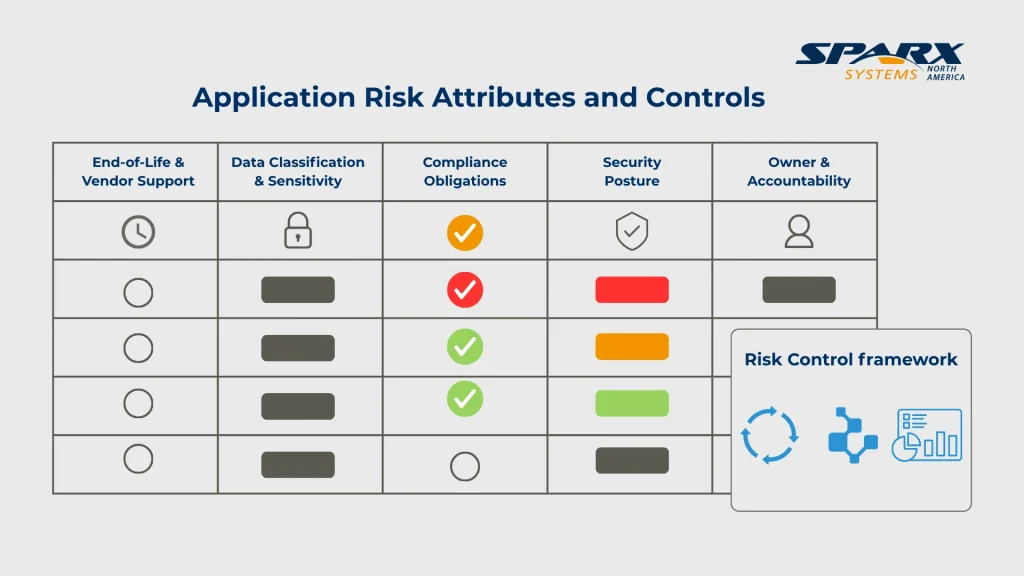
As you build this inventory, look for fields like:
- End‑Of‑Life Date and Vendor Support Status – Track when support officially ends so you can plan for an upgrade or retirement well in advance.
- Data Classification and Sensitivity – Note whether the application handles personal data (PII), valuable intellectual property, or other regulated information.
- Compliance Obligations – Identify all relevant standards (e.g., GDPR, PCI DSS) that apply to the application and whether formal audits are required.
- Security Posture – Include key metrics like vulnerability assessment scores, how often it’s patched, and its encryption status.
- Owner and Accountability – Assign a specific person or role who is responsible for monitoring that application’s risk and approving any changes.
Dependency Risk and Impact Analysis
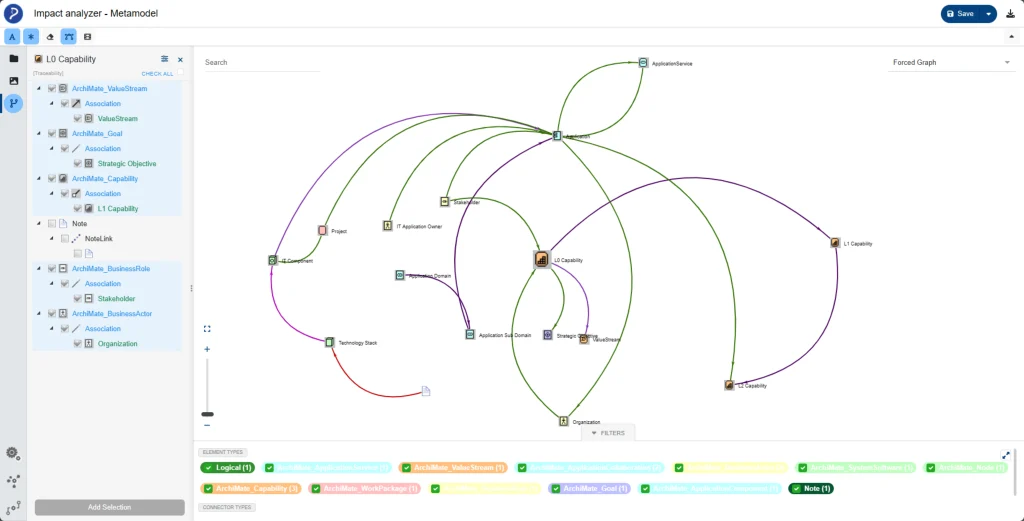
Applications rarely operate in isolation. Dependencies—interfaces, data flows and technical stacks—amplify risk. If a core system fails, downstream applications may also be affected. To analyze the blast radius:
To understand this “blast radius” before it happens, you need to:
- Model Interfaces – Map out every integration between applications, databases, and external services. Be sure to include what data is flowing and the protocols being used.
- Identify Critical Paths – Determine which applications are absolutely essential for the business to function. Then, map everything that feeds into them (upstream) and everything they feed into (downstream).
- Assess Technical Stacks – Look for shared infrastructure components, like a common database or message broker. These are classic single points of failure.
- Visualize Impact – Use dependency diagrams and analysis tools to create a clear visual map showing how one outage could spread through the network.
Advanced modeling tools like Sparx Enterprise Architect let’s you get a clear view of the dependencies of your applications with Capabilities, App Owners, Other Apps and more. Once you can see these dependency chains, you’ll know exactly where to focus your mitigation efforts. Any application with many connections or that supports a critical business function needs to be at the top of your list for testing and resilience planning.
Compliance Evidence Packs
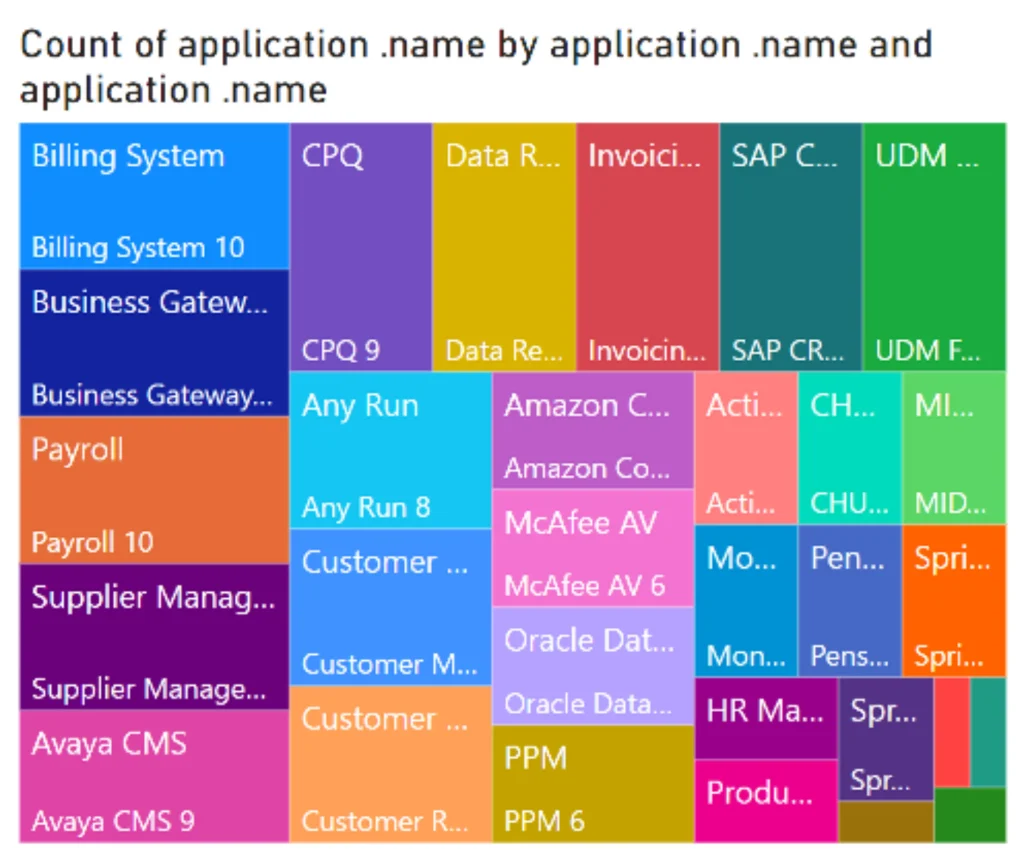
Demonstrating compliance requires clear, accessible proof that your controls are effective and that policies are being followed. A good APM system can automate the gathering of this evidence, saving countless hours of manual work.
Instead of digging through spreadsheets, you can present stakeholders with clear, interactive visuals such as:
- Risk heatmaps – These give you a quick visual of your portfolio, color-coded by risk score, EOL status, or compliance rating. This is also how you find and eliminate shadow IT, getting off those dangerous blind spots.
- Audit checklists – Instantly generate lists of applications that need attention, such as those with expiring licenses or overdue patches. Nothing falls through the cracks.
- Lineage reports – Trace data from its source to its destination across applications. This is exactly what you need to demonstrate regulatory compliance.
- Discussion logs – Keep a running record of all decisions, approvals, and remediation actions. This creates the clean, auditable trail that regulators demand.
Having this information at your fingertips transforms audits from a painful, last-minute scramble into a straightforward compliance reporting task.
Governance Cadence and Alerts
Managing risk isn’t a “set it and forget it” project; it’s an ongoing process. You need to establish a regular rhythm for governance, fueled by that clear visibility for governance to ensure your risk data is always current and that people are actually taking action.
Recommended practices include:
Quarterly risk reviews
Get business owners, security leads, and architects to review the risk dashboards. Using tools that enable collaboration like Sparx Prolaborate can make these reviews more efficient, allowing teams to update statuses and prioritize what to fix next in real-time.
Continuous improvement
Learn from what you find. Use those lessons to update your policies and refine your risk-scoring criteria. These data-driven insights are your roadmap for reducing technical debt and modernizing smarter.
Integrate with change management
Don’t let new projects create new problems. Ensure that every new project, application, or acquisition goes through an APM assessment to capture risk from day one.
By embedding Application Portfolio Management (APM) into your regular governance rhythm, you can maintain a strong security posture and demonstrate compliance at any moment, which helps avoid reactive, last-minute scrambles for information.
Get Expert Consulting and Guidance to Kickstart Your Application Portfolio Management
Risk and compliance challenges only grow as your application landscape becomes more complex. Application Portfolio Management (APM) offers the transparent, systematic approach you need to get these challenges under control.
It’s about more than just making a list; it’s about understanding how your applications are connected, what specific risks they carry, and who is responsible for them. By establishing this practice as a core part of your operations, you can shift from a reactive, firefighting mode to a proactive, confident one, turning your IT risk management strategy from a liability into a business advantage.


