
Everyone agrees that Application Portfolio Management (APM) is a great idea. But actually, doing it? That’s where things get tricky. The initial excitement for the project, even with strong backing from your Enterprise Architecture team, often meets the practical realities of data gathering. As this work ramps up and key stakeholders begin to voice their concerns, the initiative can sometimes lose its initial momentum.
Knowing what to expect and how to handle it is the key to making your APM initiative stick.
This article breaks down the most common hurdles we see organizations face during an APM implementation and gives you practical ways to clear them. This advice comes from real-world lessons learned by organizations using Sparx Systems Enterprise Architect and Prolaborate to build EA models for applications and manage their portfolios.
Talk to our APM Experts
Get a tailored roadmap, governance model, and Prolaborate dashboards aligned to your portfolio.
Data Quality and Ownership

The success of your APM portfolio is closely tied to the quality of the data it contains.
Poor-quality or missing information doesn’t just undermine confidence; it can lead to bad decisions. This problem usually crops up because of messy data: inconsistent names, duplicate entries, or just no one being in charge of updates.
Here’s how to build a foundation of data you can actually trust for your architecture and portfolio:
Set Clear Data Standards
Everyone needs to follow the same rules. Establish clear naming patterns, define which fields are mandatory, and provide templates and examples to guide contributors.
Assign Clear Owners
Every application needs two people responsible for it: a business owner and a technical owner. Their job is to keep the information accurate. Write down who is responsible for what, right in the portfolio.
Integrate Your Data Sources
Don’t rely on manual entry if you can avoid it. Integrate with your configuration management databases (CMDBs), finance systems, discovery tools, and existing Enterprise Architecture repositories.
Check Your Work Regularly
Set a regular schedule for data quality checks. You can use Prolaborate dashboards to build reports that highlight missing fields or flag data that hasn’t been touched in months.
When you have clear standards and real accountability, people will start to trust the data and use it to make real decisions.
Balancing Detail and Practical Value in APM
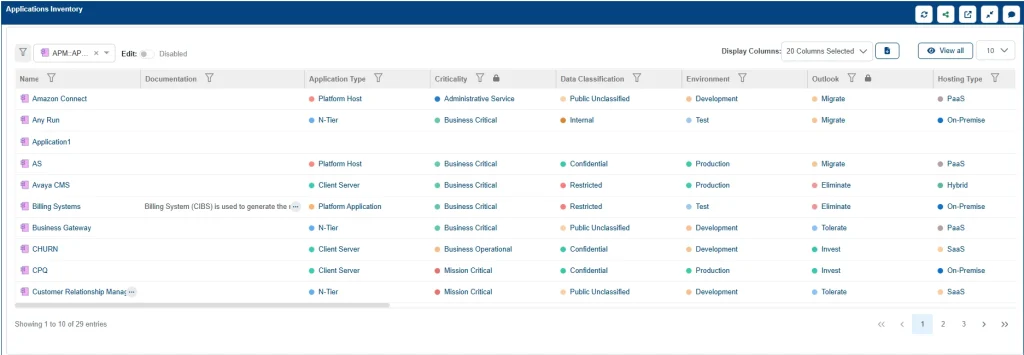
It can be tempting to fall into the “collect everything” trap, especially when building detailed EA models for applications.
Teams might get ambitious and try to track hundreds of details for every single application. This approach can become overwhelming, and the data may become obsolete almost immediately. But the opposite problem is just as bad: if you collect too little information, you can’t make meaningful comparisons.
The goal is to find a sweet spot. Here’s how:
- Start with the absolute essentials Focus on the core data that powers your enterprise architecture for APM: name, owner, cost, business capability, and lifecycle stage. Don’t add a new field unless you can point to a specific decision that requires it.
- Not all apps are created equal Your mission-critical applications deserve a deep dive. Those smaller, ancillary tools? A lighter review is probably fine. Avoid a one-size-fits-all approach to data collection.
- Add detail as you mature You can always add more later, like technical debt scores or cloud-readiness, as your APM maturity models and assessment frameworks evolve. When you do add new fields, explain why to the team to keep them engaged and on board.
- Combine data into smart scores Instead of collecting 20 tiny data points, combine them into a single, high-level score. For example, a “Technical Health” score can summarize several underlying metrics at a glance.
A lean model is easier for people to maintain, which means the data you collect will actually get used.
Engaging Stakeholders Across Business and IT

APM isn’t just an “IT thing.” It involves everyone: business owners, enterprise architects, developers, finance, and operations.
You might encounter some hesitancy. It’s natural for people to be cautious about a new process, especially if they see it as extra bureaucracy or feel uncertain about its impact on their roles. To make APM successful, getting everyone engaged is essential.
- Show them “What’s in it for me?”
Don’t just talk about “the portfolio.” Talk about how it will help their department reduce costs, justify budgets, and make smarter investments. Use concrete examples and success stories, not just theories.
- Build it together
Invite representatives from business, IT, and your Enterprise Architecture team to help define the inventory, create the scoring criteria, and build the decision-making framework. When people help build the solution, they’re bought into the result.
- Give everyone their own dashboard
Use APM visualizing tools like Sparx Prolaborate to create views tailored for each role. Business leaders want to see capability maps. Finance needs to see cost reports. Technical teams and architects want to see dependency diagrams. Give them what they need, not a one-size-fits-all report.
- Don’t assume they know how to use it
Host workshops. Show contributors how to update data in Enterprise Architect and how to read the dashboards. Create simple job aids and FAQs to make it easy.
Engagement isn’t a one-time launch event. It’s an ongoing conversation. Keep it alive with regular updates, forums, and check-in meetings.
Keeping Models Fresh with Integrations and Tools
An APM portfolio is a living thing. If it’s not kept up-to-date, it quickly loses its value.
The initial excitement can fade when teams get bogged down in manual data entry. This is a common challenge to address. The goal is to make updates as painless as possible.
Connect to Your Sources of Truth
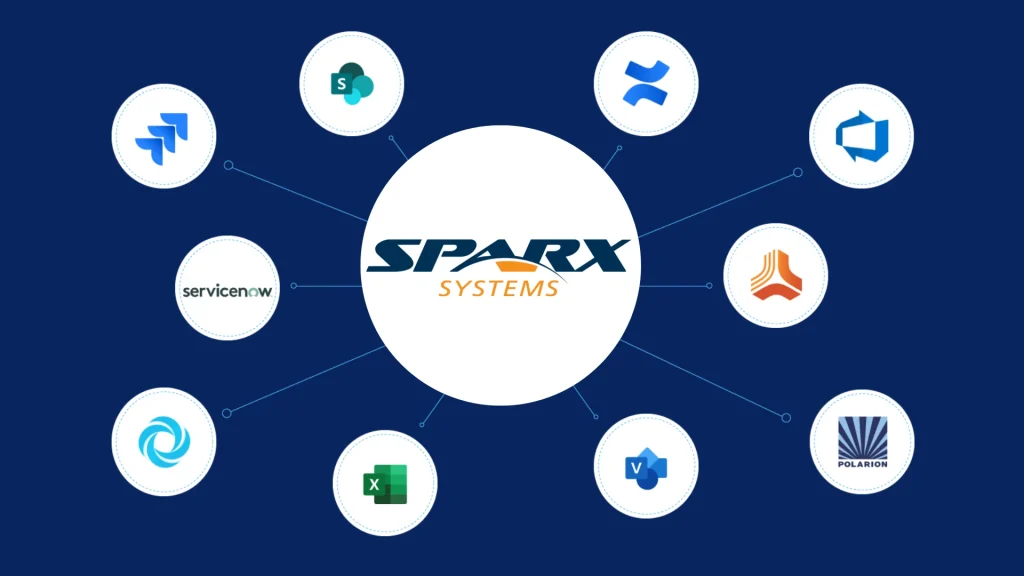
Connect Enterprise Architect, your central tool for enterprise architecture for APM, directly to your CMDBs, service desks, and financial systems. Pull data automatically instead of asking people to type it in.
Use Discovery Tools to Spot Changes
Use your network and application discovery software to find new servers or outdated software versions, and feed that data right into the portfolio.
Set a Regular Update Schedule
Don’t just hope people remember. Schedule periodic reminders for owners to review their data. You can use Prolaborate’s collaboration features to send these reminders.
Make it Easy to Contribute
People will avoid a clunky system. Provide simple forms or spreadsheets. Use Prolaborate’s in-browser editing features to lower the barrier for quick updates.
The less effort it takes to maintain the portfolio, the more likely it is that the data will stay current and useful.
Governance Patterns That Stick

You can have perfect data and engaged stakeholders, but the initiative can lose direction without a clear process for making decisions.
Without it, you get inconsistent decisions, rationalization plans that never happen, and confusion over who is supposed to do what. Good governance means building a process that lasts, which is where strong Enterprise Architecture support for APM becomes critical.
- Define who does what: Create a simple RACI matrix to clearly define your APM governance lifecycle and roles. Who is responsible for maintaining the inventory? Who from the EA team runs the assessment workshops? Who has the final “yes/no” on retiring an app? Who tracks the savings?
- Set a regular meeting cadence: Hold regular governance meetings—maybe quarterly, to review the portfolio scores, approve rationalization plans, and adjust your criteria. Tie these meetings to your main budgeting and planning cycles.
- Write down your decisions: When you decide to retire or invest in an app, document the decision, the reason why, and the expected benefit. Make this history easy to find in Prolaborate so new team members can understand the context.
- Measure and share your progress: Track the real-world results: cost savings, risk reduction, number of applications retired. Share these APM Metrics and KPIs with leadership to prove the value and maintain their support.
- Review your process annually: Your governance model isn’t set in stone. Treat it as a living process. Review it once a year and adjust roles, schedules, and metrics based on what’s working and what isn’t.
A strong maturity models and governance framework is what turns APM from a one-time project into a permanent, value-driving part of your business.
See Sparx Systems’ APM in Action
Walk through TIME analysis, lifecycle roadmaps, and real dashboards tailored for your use cases.
Getting an Application Portfolio Management program off the ground isn’t easy, but the common roadblocks are well-known.
Success isn’t about one single thing. It’s about building a foundation of high-quality data for your architecture and portfolio. It’s about keeping your data model lean and focused. It’s about getting buy-in from both business and IT teams by showing them the value. And it’s about using productive tools and techniques to make life easier and building a governance process that actually sticks.
By tackling these challenges head-on, you can move APM from a painful project to a powerful, ongoing discipline that strongly supports your wider enterprise architecture goals. When supported by the right tools, like Sparx Systems Enterprise Architect (for building your EA models for applications) and Prolaborate (for visualizing them), you can finally deliver the cost savings, risk reduction, and agility that APM promises.


