
Thinking of Application Portfolio Management (APM) as simple IT housekeeping is a major understatement. At its core, APM is a business practice. It’s the only way for an organization to get a firm grip on what software it actually owns, see how (or if) those applications support business goals, and pinpoint exactly where money, time, and resources are being drained.
By creating a complete catalog of applications and scoring them on their real-world cost, risk, and value, APM provides the data to make smart decisions. This is where the real returns and the true value of application rationalization appear.
As software spending continues to climb, a clear APM strategy is no longer a “nice-to-have”. This article breaks down the core benefits of application portfolio management in practical terms: financial, risk, and agility.
Get a tailored roadmap for implementing Application Portfolio Management with Sparx Systems North America
Why Do We Need Application Portfolio Management (APM)?
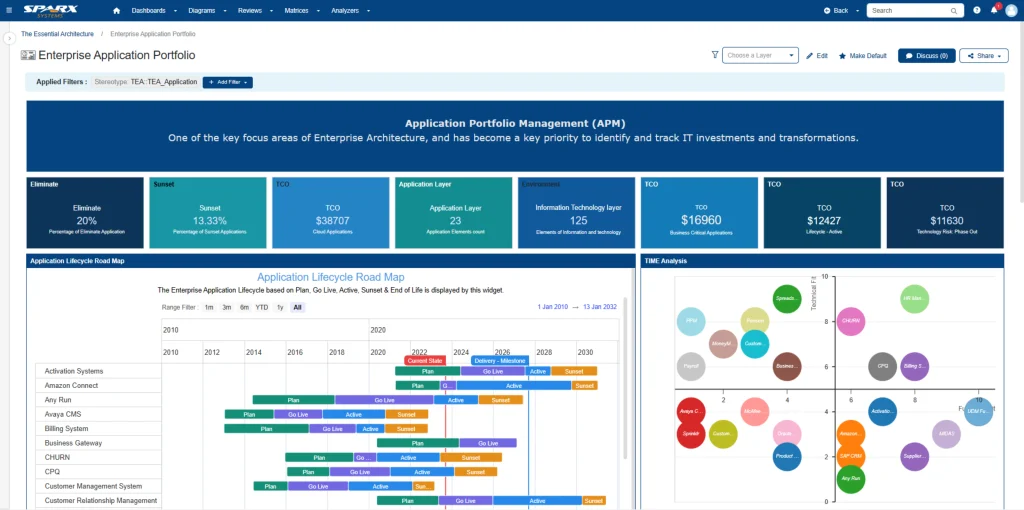
If you’ve ever wondered why do we need application portfolio management, just look at the average organization. Applications pile up. It’s a natural side effect of growing the business, merging with other companies, or even just different departments buying their own tools. It’s also a critical process forusing APM to support M&A, divestitures, consolidation. Before you know it, this “portfolio” is a messy, tangled web of redundant, outdated, and disconnected systems. This isn’t just clutter; it’s an active drain on the budget and a major roadblock to change.
APM cuts through this chaos by answering three straightforward questions:
- What software do we actually have?
- What are we paying for it?
- Is it delivering real value?
This process delivers returns in three main area
Cost optimization
Most companies are overpaying for software, especially SaaS, and don’t even know it. This is a cornerstone of IT cost optimization. Gartner famously estimated this overspend at 25% or more, simply from a lack of coordination. Just seeing everything in one place lets you find and eliminate overlapping tools, freeing up budget almost immediately.
Risk reduction
APM shows you exactly which applications are running on outdated technology or handling sensitive data without proper controls. This allows teams to fix the biggest problems first. A smaller, simpler portfolio is also much easier to secure and audit.
Agility and innovation
Do you want to migrate to the cloud? Or upgrade a core system? Without a map, it’s a guessing game. When your teams know the entire portfolio and its dependencies, those big decisions get made much, much faster. Getting rid of legacy bloat directly reduces technical debt and helps you launch new things sooner.
APM isn’t just about one-time fixes. Of course, you get “quick wins” like canceling software no one is using. The real, lasting value comes as this new discipline frees up your team’s time, tightens security, and ensures your IT investments are actually helping the business win.
Financial Benefits: Eliminating Redundancy and Controlling Costs
The clearest and fastest win, and one of the biggest cost savings from APM, is finding and stopping financial waste. This is often achieved through a dedicated strategy for cost optimization through application rationalization. In nearly every organization, redundant applications and “zombie” licenses (paid for but unused) are hiding in plain sight. A systematic review changes that.
Eliminating overlapping tools

When different teams buy different tools that do the same job, you’re paying for it multiple times. Application Portfolio Management (APM) identifies these functional overlaps, allowing you to pick the best-in-breed tool, consolidate your licenses, and retire the rest.
Reducing integration and maintenance overhead
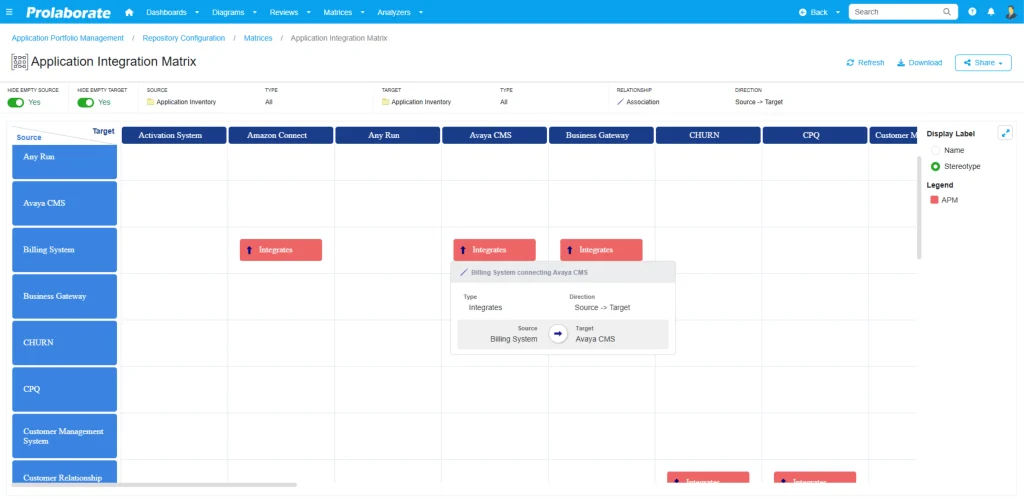
Every application has a hidden cost. It needs support. It needs patching. It needs to be integrated. Each one adds a little more complexity. As you start to trim the portfolio, the overhead for maintenance and vendor contracts drops significantly, freeing up your operations team.
Right‑sizing infrastructure and support
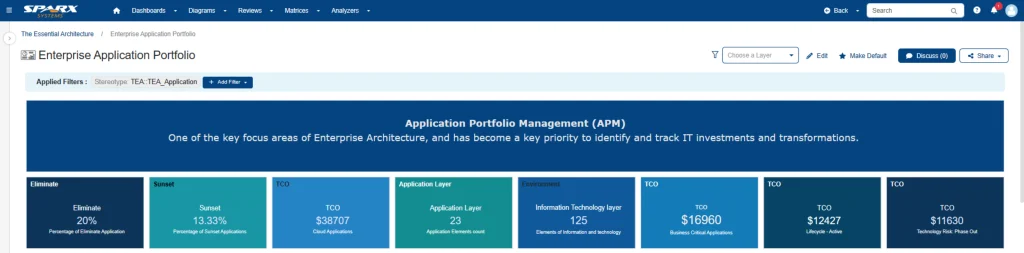
Are you paying for a massive server to run an application only three people use? Usage metrics from APM reveal these kinds of expensive mismatches. Decommissioning or right-sizing these systems cuts direct hosting and support costs.
Reinvesting savings in innovation
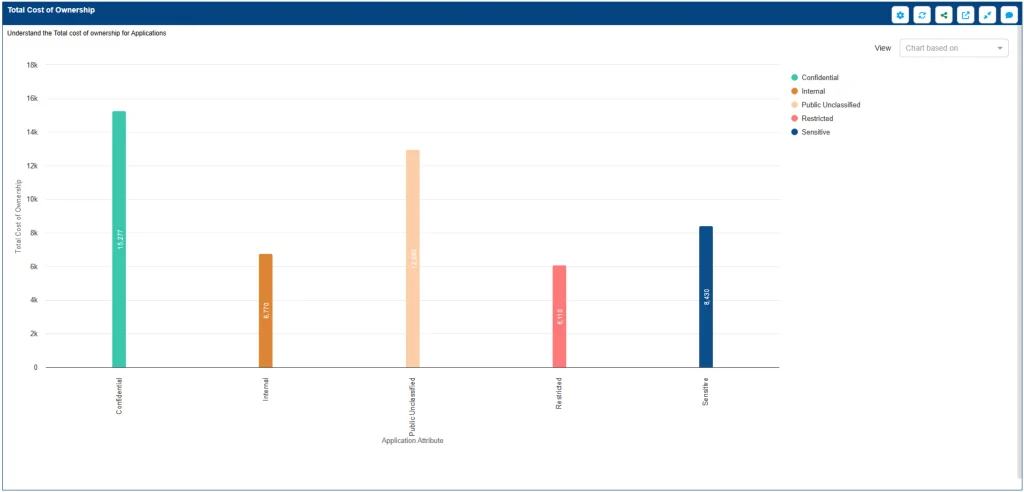
This is the best part. The money saved isn’t just a line item; it’s fuel. These new funds can be redirected from “keeping the lights on” to projects that actually grow the business. This creates a virtuous cycle, dramatically improving your application management ROI (Return on Investment). This is a key part of measuring ROI from APM initiatives to prove the value of the program.
This is where a tool like Sparx Enterprise Architect becomes practical, allowing teams to attach and model these costs directly as tagged values.
Risk & Compliance Benefits: Visibility and Auditability
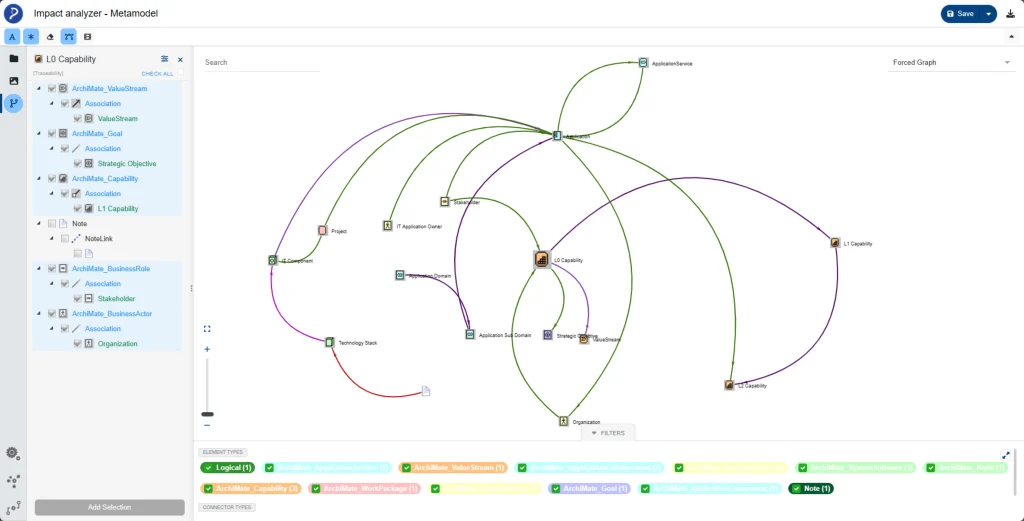
Today’s complex regulatory landscape (think GDPR, HIPAA, or CCPA) requires careful attention. At the same time, “shadow IT” i.e., software bought and used by departments without IT’s approval and outdated systems create massive blind spots. This is where APM provides risk reduction and compliance via portfolio visibility and becomes a powerful tool for managing this risk.
- Exposure Reduction: It’s simple math: the more applications you have, the larger your “attack surface” is for a security breach. Rationalizing the portfolio simplifies the entire landscape, reducing the number of systems that need to be secured, patched, and monitored. This is another clear example of the value of application rationalization.
- Visibility Into Technical Debt: An application inventory doesn’t just list an app’s name. It tracks its underlying technology, its vendor support status, and any known vulnerabilities. A good dashboard can light up, showing you exactly which applications are exposed because of end-of-life tech. This helps managers build a case for upgrades before a crisis.
- Audit‑Ready Lineage and Ownership: When an auditor asks, “Who owns this application and what data does it touch?” you need to have an answer fast. APM provides that clear line of ownership and maps out dependencies. Using an APM tool like Prolaborate can even log the discussions and approvals, creating a transparent audit trail.
- Compliance Mapping: You can take this a step further by linking applications directly to the specific regulations and security controls they must meet. This makes gaps in compliance immediately obvious, allowing risk officers to prioritize and prove remediation.
When you can actually quantify risk reduction (e.g., “We retired 15 high-risk apps this quarter”), executives see the clear APM business case and strategic value, not just a cost center.
Agility & Modernization Benefits: Accelerating Change
In today’s market, the fastest company often wins. Nothing slows a company down like a mountain of legacy software. It creates a drag on everything, from product launches to cloud adoption. APM is the tool you use to clear that path.
- Faster Decision-Making – With a clear portfolio map, leaders can stop guessing. They can quickly and confidently identify which applications are prime candidates for replacement, which can be “lifted and shifted” to the-cloud (rehosting), and which need to be rebuilt (replatforming).
- Prioritized Cloud Migrations – Not every application is ready for the cloud. Portfolio data, especially when paired with a value-vs.-effort score, helps you build a smart migration roadmap. This data-driven process ishow APM supports cloud migration decisions, allowing you to target the easy wins first and build momentum for the harder, more complex migrations.
- Improved Innovation Cadence – Think about how much time your development team spends just maintaining old, brittle systems. Every obsolete app you remove, every redundant function you consolidate, is time given back to them. That’s time they can spend building new features, not just patching old ones.
- Support for Transformation Initiatives – Big initiatives like a “digital transformation” depend on knowing how your systems work. APM provides the necessary visibility for enabling digital transformation via leaner app landscapes. It models the dependencies and shows which applications support which business capabilities, ensuring that your big-picture investments are actually aligned with your business strategy.
By integrating this data into enterprise architecture models, organizations can plan these modernization efforts with real confidence. For example, Prolaborate’s roadmap charts can show executives the entire transformation journey of what’s being retired, what’s new, and when it all happens.
Stakeholder Outcomes & 30-Day Business Value Plan
Different leaders care about different outcomes. A good APM program speaks to each of them in their own language:

- CIO: Gets a single source of truth for the portfolio’s total cost, risk, and technical health. This data builds the business case for IT investments and strategic planning.
- CFO: Sees a direct reduction in operational (“run”) costs and a clear plan for reinvesting those savings. Dashboards can show total spend, savings opportunities, and the direct application management ROI from rationalization projects.
- CISO: Benefits from a smaller, more secure attack surface and provable compliance. Heatmaps can pinpoint high-risk applications and track the remediation effort.
- Product and business owners: Get their new features to market faster. They can see exactly which applications support their business capabilities and watch as rationalization frees up development capacity for innovation.
You don’t need a year to see results. A strong APM business case can be built on tangible wins in the first 30 days. To get value from APM quickly, follow this focused plan:
Collect the minimum viable data
Start small. Collect the “minimum viable data”—just the application name, its owner, its cost, and how critical it is. Use simple surveys or pull from existing finance/CMDB data. Get this inventory into a versatile modeling tool like Sparx Enterprise Architect.
Build two dashboards
Build two simple dashboards. First, a cost dashboard (run cost by business domain). Second, a risk dashboard (applications with outdated tech). Prolaborate’s card and heatmap widgets are perfect for this.
Schedule reviews
Get the key players in a room. Hold a kick-off workshop with the CIO, CFO, and CISO to agree on the goals. In week four, review the new dashboards, identify the most obvious “quick wins,” and assign someone to go get that saving.
Communicate progress
Share the dashboards. When you get that first win, celebrate it. Show people the progress and ask for feedback. This transparency is what builds momentum for a long-term APM program.
Following this simple plan can deliver tangible benefits in a month, which motivates everyone to support the full initiative.
Explore pre-built templates, dashboards and governance workflows that help you launch APM in just weeks.
Application Portfolio Management (APM) is, at its core, a discipline for turning IT chaos into business clarity. It moves an organization from guessing to knowing by letting you see what you own, analyze what it’s worth, and make smart decisions about what to cut and where to invest.
The benefits of application portfolio management are real: hard-dollar savings from cutting redundant software, a stronger security posture, and a genuine ability to move faster on new initiatives. With a focused 30-day plan, you can start delivering those wins immediately. Over time, APM stops being “an IT project” and becomes what it truly is: a core business discipline for managing one of your most critical assets.


