
Application Portfolio Management (APM) has become an essential part of any modern IT strategy, especially as companies undergo digital transformation. As companies grow and rely more heavily on digital tools, the need to manage those tools properly grows right along with them. APM provides a clear process to inventory, evaluate, and fine-tune every application the company uses. When you have a clear picture of your entire software landscape, you can make smarter decisions, connect IT work directly to business goals, and get a real handle on costs, risks, and how quickly your teams can adapt.
In this article, we’ll break down the growing importance of application portfolio management, how to spot the signs of a messy portfolio, what leadership actually wants to see from it, and how Application Portfolio Management (APM) tools like Enterprise Architect and Prolaborate can help make sense of all the complexity.
See how you can fast-track your application rationalization journey with ready-to-use accelerators and best practices.
Why Application Portfolio Management Matters: Cost, Risk, Agility
Application Portfolio Management (APM) is fundamentally a structured way to figure out what software you own, how it’s being used, and how it’s all managed. This clarity highlights the business need for APM: to create a single source of truth that everyone can use for planning, budgeting, and handling changes. When everyone is working from the same playbook, it’s far easier to communicate decisions and get things done.
The real business value of APM comes from its ability to optimize three key areas:
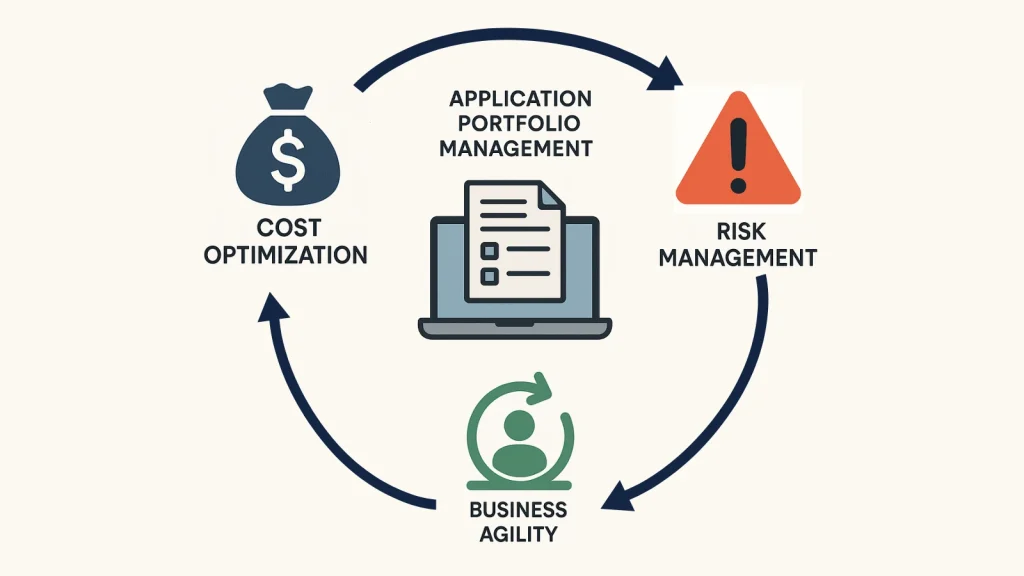
- Cost Optimization: Redundant or underused applications are budget killers. APM pinpoints these overlaps and finds software that can be retired, helping to cut IT costs without losing important capabilities.
- Risk Management: Old, unsupported legacy applications are a huge compliance and cybersecurity risk. The role of APM in enterprise IT is to bring these dangers to the surface by tracking each application’s importance, owner, and support status.
- Business Agility: Companies need to move fast to keep up with the market. A clean, well-managed application portfolio means IT can respond faster and free up people and money for innovation.
When all the stakeholders can see the complete picture, they can make smart, informed decisions about what to keep, what to replace, and what to retire. This doesn’t just control spending; it also strengthens governance and reduces the risk of non-compliance.
Typical “Messy Portfolio” Symptoms
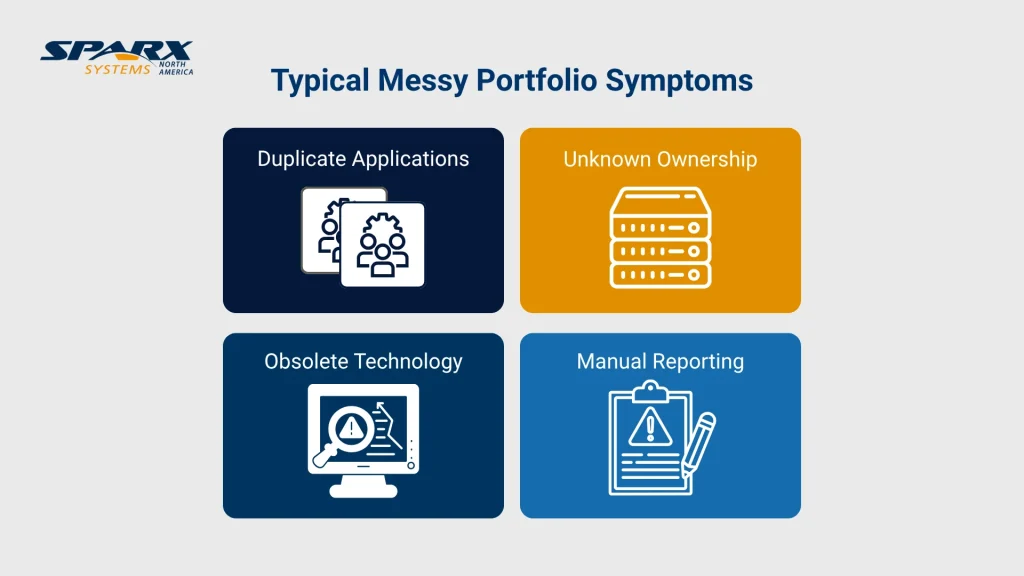
Most portfolios grow organically, which is a polite way of saying they become a mess over time. This naturally leads to confusion, delays, and an inability to support wider digital transformation efforts. APM helps clean up the chaos by establishing consistent definitions, clear ownership, and reliable records so problems can actually be found and fixed. The goal is to stop relying on one-off conversations and static spreadsheets, and instead move to a shared, agreed-upon inventory that helps everyone make faster, smarter choices.
Without a solid APM practice, organizations often face these common problems:
- Duplicate Applications: You find out different departments are paying for multiple, separate tools that all do the exact same thing. This drives up license and support costs needlessly.
- Unknown Ownership: An application is running, but no one knows who is actually responsible for it. When it breaks or becomes a security risk, it’s a major liability.
- Obsolete Technology: Old systems are left running simply because no one is tracking their usage or value. This piles up technical debt and makes future changes harder.
- Manual Reporting: All your application data is trapped in outdated spreadsheets or just lives in a few key people’s heads (“tribal knowledge”). This makes getting accurate answers slow and painful.
These symptoms all add up to wasted money, higher risks, and missed opportunities. APM provides the structure you need to fix these problems and get a clear, transparent view of your entire application landscape.
Executive Outcomes Your CFOs and CIOs Care About

C-level executives aren’t interested in the technical details; they care about measurable business outcomes. This is where the business need for APM becomes crystal clear. It directly supports their biggest strategic goals by:
- Reducing Total Cost of Ownership (TCO): Rationalizing the application portfolio directly cuts operating and license costs. This is a number you can take straight to the CFO.
- Increasing ROI on Digital Initiatives: By identifying which apps provide the most value, APM helps you funnel money to the projects that matter most to the business strategy, ensuring that IT spend directly supports digital transformation goals.
- Stronger Compliance Posture: APM gives you a clear map of which systems handle sensitive data, which is essential for proper governance and avoiding fines.
- Faster M&A Integration: A clean, well-documented portfolio makes the painful process of merging two companies’ IT environments significantly easier and faster.
Ultimately, APM translates IT complexity into clear, actionable metrics that leadership understands. It’s how you demonstrate that IT is a strategic partner driving business value, not just a cost center “keeping the lights on”.
Why APM Dashboards are Business-Critical
All this data is worthless if it’s just sitting in a database. Dashboards are what make your APM data visible and, most importantly, actionable.
Interactive APM visualization tools, like Prolaborate from Sparx Systems, are built to cut through the noise. They turn a complex application landscape into something you can understand at a glance.

With a good interactive dashboard, you can:
- Create Application Heatmaps: Instantly see which apps are new, which are aging, and which are critical to the business.
- Highlight Redundancy: Use capability maps to see exactly where different departments are using (and paying for) duplicate tools.
- Track Lifecycle Transitions: Build clear timelines and roadmaps to plan your rationalization efforts so nothing gets missed.
- Generate Executive Reports: Share real-time portfolio health with CFOs, CIOs, and risk managers in a format they can actually use.
These dashboards aren’t just for IT. They are decision-making tools for the entire business, helping to support audits, guide strategy, and get everyone collaborating effectively.
Application Portfolio Management Roadmap: Discover, Assess, Optimize
Getting started with APM doesn’t need to be a massive, overwhelming project. A simple roadmap helps your team get started, learn as you go, and build momentum.

Think of it as setting clear expectations for who is involved, what information you’re gathering, and how feedback will shape the next steps. Breaking the work into clear stages creates a predictable rhythm, which supports transparency and makes your progress repeatable.
Phase 1: Discovery
- The first step is just figuring out what you have. Inventory all your applications, who owns them, and who uses them.
- Build your starting repository in a tool like Sparx Enterprise Architect.
- Find your data sources (like your CMDB or finance systems) and automate the updates where possible.
Phase 2: Assessment
- Once you know what you have, you can evaluate it. Score applications based on their real cost, the risk they carry, and the business value they provide.
- Use these scores to prioritize what to work on first (i.e., what to rationalize).
- This is the critical step: talk to the business units. Share your findings and get their buy-in to make sure your insights are correct.
Phase 3: Optimization
- Now you take action. Decommission the low-value applications and consolidate the tools that do the same job.
- This frees up resources to align your (now leaner) application portfolio with the company’s core strategy.
- Use your Prolaborate dashboards and KPIs to monitor progress and show your results.
Each phase builds on the last and delivers tangible results. This is crucial for demonstrating value right away, which helps secure and maintain support from your executive sponsors.
Experience Prolaborate in action and discover how dashboards, heatmaps, charts and executive views can transform your IT strategy.
In an age of constant digital transformation, the importance of application portfolio management is no longer just a background IT task. It’s a core business discipline.
The role of APM in enterprise IT is to bring clarity to complex, messy environments. It provides the framework to intelligently balance costs with risks and empowers leaders to make sound strategic decisions. By tackling the common portfolio pitfalls (like duplicates and unknown ownership), APM helps transform the IT department from a simple cost center into a true strategic partner for the business. With the right tools, like Prolaborate, organizations can finally visualize their journey from chaos to clarity and start driving meaningful, measurable business outcomes.


