
Application Portfolio Management (APM) is more than just a list of applications; it is the strategic plan for your IT landscape. It defines the business value and role of every application. However, if this strategic view is separated from the tools used for daily work, specifically ALM and DevOps platforms, you lose visibility across the organization.
Connecting these areas is essential for complete oversight. By linking APM strategy directly with development activities through Sparx Systems Enterprise Architect’s DevOps integration, organizations create a continuous feedback loop. This turns architectural models from theoretical diagrams into active tools that guide real-world delivery.
Get a guided walkthrough of Enterprise Architect + Prolaborate dashboards, and visualization use cases tailored to your application portfolio and priorities.
Why Architects Need Visibility into Delivery
Architects often plan for the “target state” several years ahead, while development teams work in two-week sprint cycles. This difference in timing creates risk. To govern effectively, architects must understand how long-term decisions affect immediate operations to ensure comprehensive application lifecycle visibility.
Bridging this gap provides several key advantages:
- Checking Strategy against Reality: A decision to retire an old platform next year must be based on current facts. Visibility into active projects prevents you from removing systems that are still needed for ongoing work.
- Managing Dependencies Early: When an application is scheduled for a major upgrade, architects need to see how this affects other active projects (Epics). This allows you to identify and fix resource conflicts before they delay delivery.
- Data-Driven Priorities: Understanding the specific challenges delivery teams face allows for better use of modernization budgets. It shifts focus from general improvements to fixing high-friction areas.
Establishing Sparx EA Traceability: Apps, Requirements, Epics, and Releases
To get real value, you must establish clear ALM to APM traceability by connecting high-level APM goals to the detailed work happening in ALM or DevOps tools.
Integration Strategies:
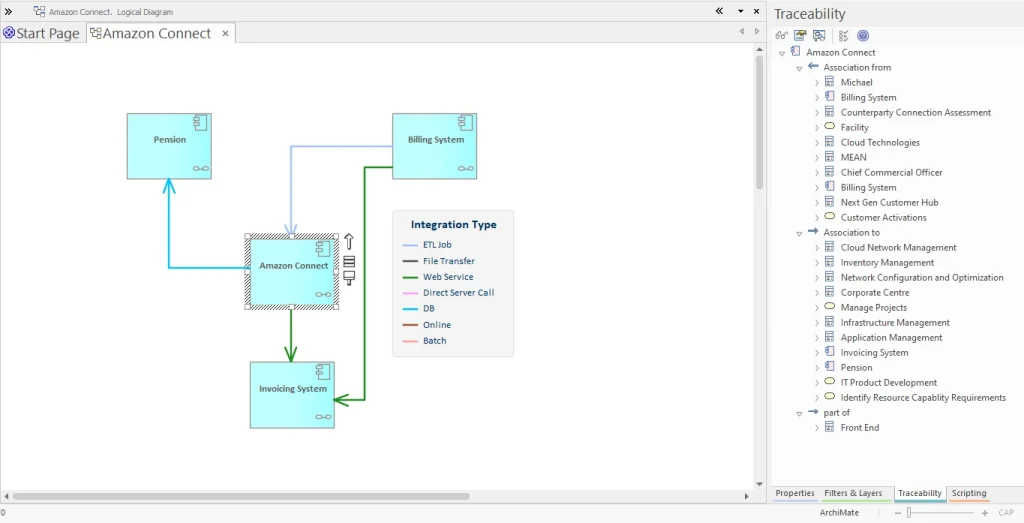
- Map Applications to Epics: Create a direct Jira/Azure DevOps Sparx link between your enterprise architecture applications and specific User Stories or Epics. This creates immediate traceability, clearly showing that “Application A” supports “Feature B,” and highlighting the risk of making changes.
- Visualize the Release Path: When changing or removing an application, track exactly which release version depends on that change. This frames technical updates as necessary steps for specific business releases (e.g., “Q3 Market Expansion”).
- Two-Way Sync: Traceability must work both ways. By linking architecture records to release builds, architects can see how code-level changes alter the broader portfolio. This ensures the architecture records evolve alongside the code.
Communicating Business Value via Prolaborate
Business stakeholders need clear summaries rather than complex technical diagrams. APM Tools like Prolaborate are essential for translating architectural data into business insights that align with specific APM stakeholder views with Prolaborate.
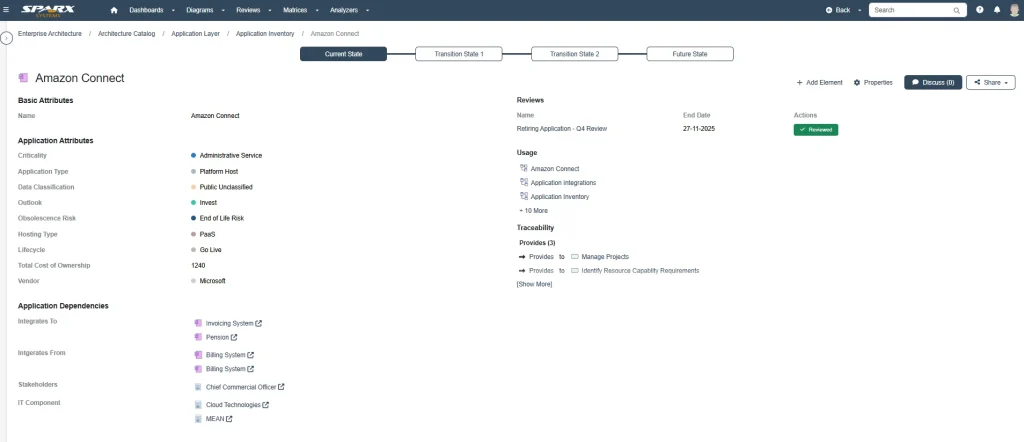
- Dashboards for Stakeholders: Replace raw data exports by building APM dashboards in Prolaborate. Show the impact of technology changes on current delivery schedules using simple status indicators (like Red, Amber, Green).
- Visualizing Lifecycle Status: Use widgets to clearly display an application’s status—whether Active, In Maintenance, or Retiring. This allows stakeholders to instantly see the health and lifespan of critical tools.
- Executive Impact Summaries: Reports should clearly show which critical systems are changing and how those efforts support core business goals, such as moving to the cloud or launching new digital channels. This aligns IT operations with business strategy.
Integration Architecture: OSLC Sparx Integration and REST
Smooth Sparx EA-DevOps traceability depends on strong standards. Establishing a reliable data exchange is essential for integrating Sparx EA APM data with other systems and ensuring data is accurate.
- OSLC for Connecting Data: Leveraging OSLC Sparx integration acts as a standard bridge for ALM tools like Jira or IBM Rational. It keeps a “single source of truth” by connecting requirements and user stories directly to architecture elements without duplicating data.
- REST APIs for Pipelines: For DevOps tools including Jenkins, GitHub, and Azure DevOps, REST APIs allow you to automatically pull in build and deployment data.
This automation ensures that architecture documentation remains a living picture of the environment, reflecting the current state of deployment rather than an outdated snapshot.
Reporting for Strategic Governance
Effective reporting turns data into control. By combining strategic plans with real-time delivery numbers, organizations can answer critical questions.
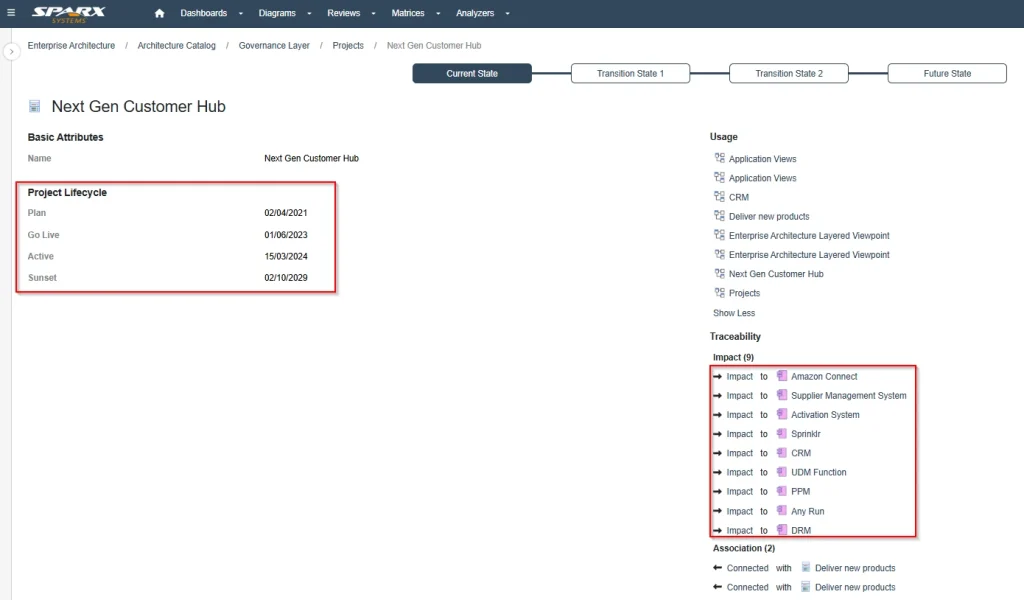
- Traceability as Risk Management: You must be able to trace a direct line from a strategic business goal, through the application portfolio, down to the specific project being built. If a project is delayed, the impact on the strategic goal becomes immediately visible.
- Measuring Technical Debt: Reports should show how technical debt or poor application health slows down delivery speed. This translates technical issues into clear business costs.
- Making Decisions with Evidence: Start by defining the right KPIs for APM such as budget adherence and delivery timelines alongside application health. This provides the proof needed to invest in modernization, demonstrating that fixing technical debt now will speed up future delivery.
The Value Stream: App → Service → Epic
This structure serves as the logical backbone for understanding value:
- Applications → Services: Define which applications support specific critical business services. This mapping clarifies risk: if “App X” fails, “Service Y” stops working.
- Services → Epics: Link those services to the active work items (Epics).
This clear link helps with resource allocation. If an application budget is cut, the organization can immediately see which business services will be affected and which planned features must be removed, making trade-off decisions transparent.
Managing the Roadmap and Release Timeline
Finally, these elements must be mapped against a timeline. A Release Impact View allows you to plot portfolio changes against the delivery calendar.
For example, if a major application update is scheduled for October, but the underlying infrastructure is set to be removed in September, a critical conflict exists. Seeing these dependencies early allows you to solve problems before they happen. It aligns the architectural roadmap with delivery reality, ensuring critical applications are refreshed on schedule and preventing gaps in capability.
Cut Months of Setup into Days! Start with Proven Sparx Application Portfolio Management Templates
By linking APM with ALM and DevOps, architects shift from documenting the past to enabling the future. This approach ensures that APM functions not as an isolated library, but as a central navigation system within the broader Sparx EA APM ecosystem.


